
エアスタイラーが髪をカールさせる仕組み
髪をはさむクリップはありません。回転するバレルもありません。では、エアスタイラーはどうやって髪をカールさせるのでしょうか?
·
エアスタイラーには、髪をはさむクリップがありません。速い空気の噴流が、コアンダ効果(Coandă effect)によって曲面のバレルに張りつくように流れ、髪をバレルに巻きつけて、その形のまま乾かします。髪が新しい形で乾くと、弱い結合がカールを固定します。この状態は、湿った空気が結合をほどくまで続きます。
エアスタイラーが髪をカールさせる仕組み
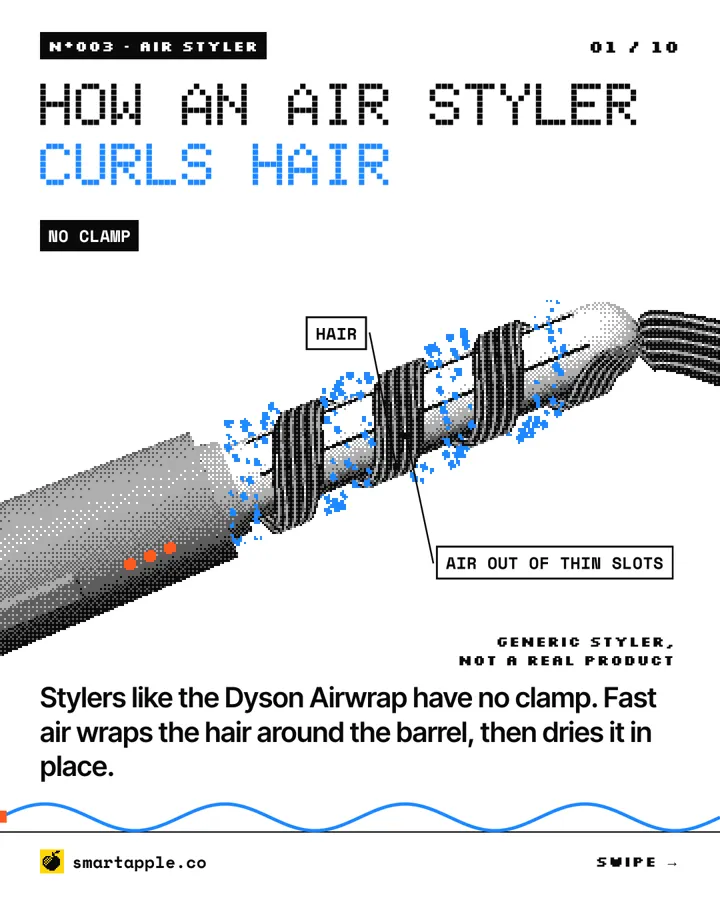
Dyson Airwrapのようなスタイラーには、髪をはさむクリップがありません。速い空気の流れが髪をバレルに巻きつけ、その形のまま乾かします。
スタイラーの内部
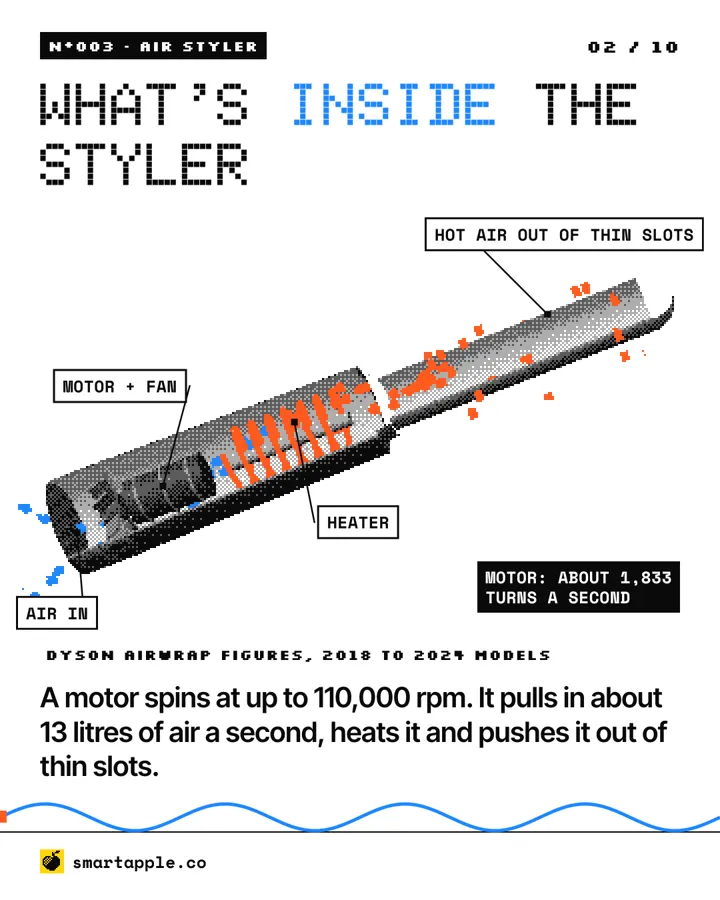
モーターは最大で毎分110,000回転します。1秒間に約13リットルの空気を吸い込んで温め、細いスリットから押し出します。
空気は曲面に沿って流れる
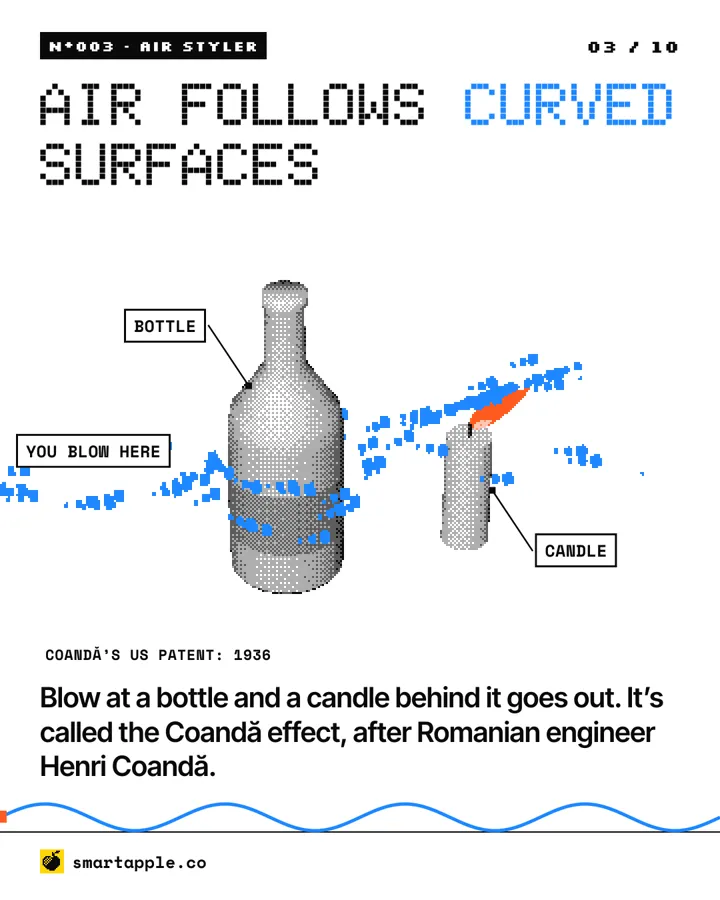
ボトルに向かって息を吹きかけると、その後ろにあるろうそくの火が消えます。これは、ルーマニアの技術者アンリ・コアンダ(Henri Coandă)にちなんで、コアンダ効果と呼ばれています。
空気がバレルに沿って流れる理由
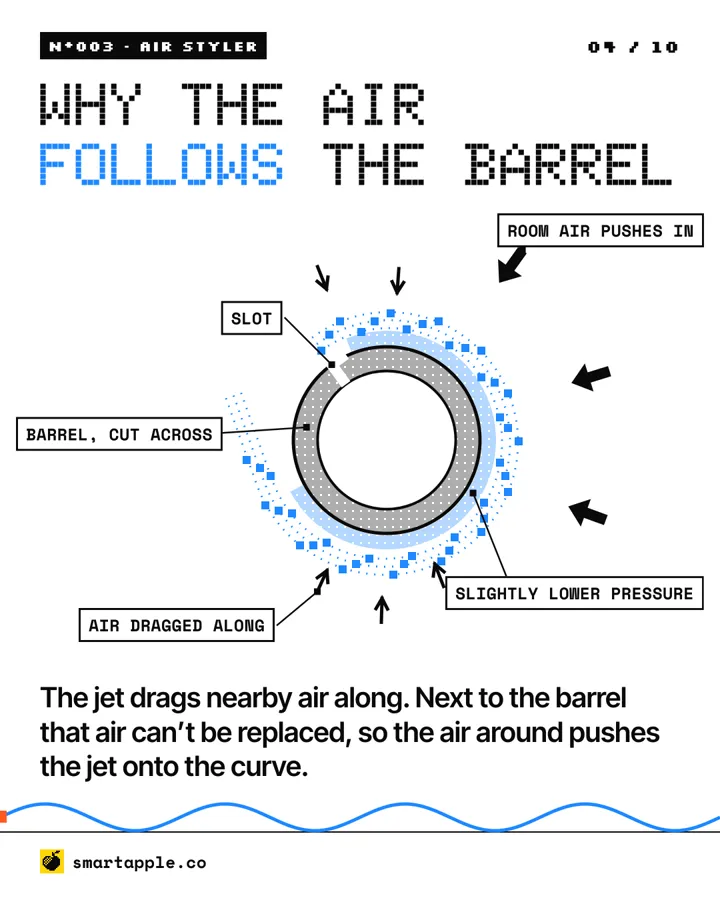
噴流は、近くの空気を一緒に引きずっていきます。バレルのすぐそばではその空気が補われないため、周囲の空気が噴流を曲面へと押しつけます。
空気が髪を巻きつける
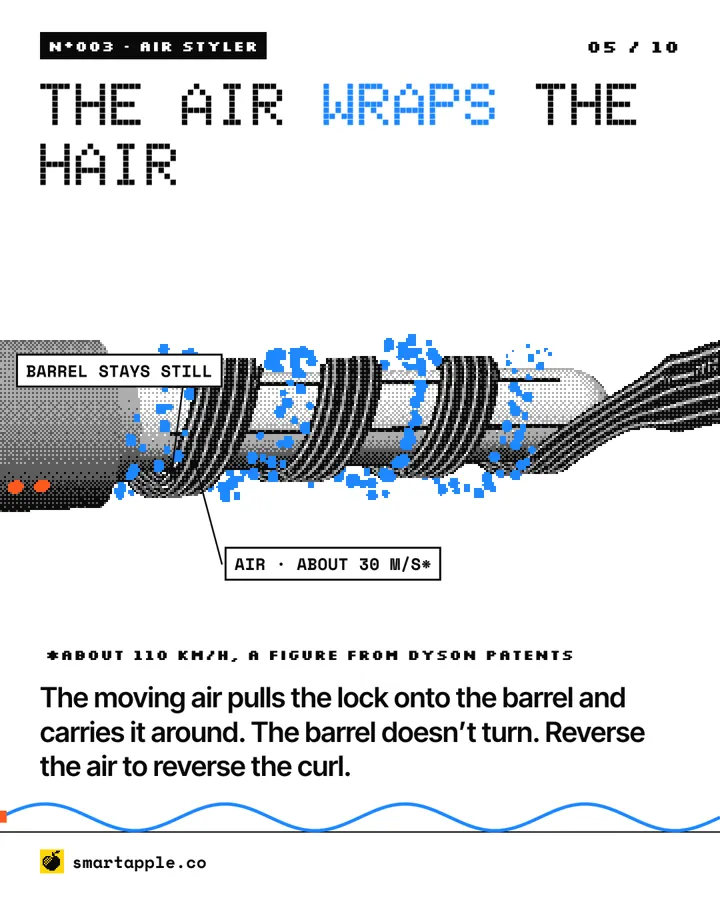
流れる空気が毛束をバレルに引き寄せ、バレルに沿ってぐるりと運びます。バレルは回転しません。空気の向きを逆にすれば、カールの向きも逆になります。
空気の温度はどのくらい?
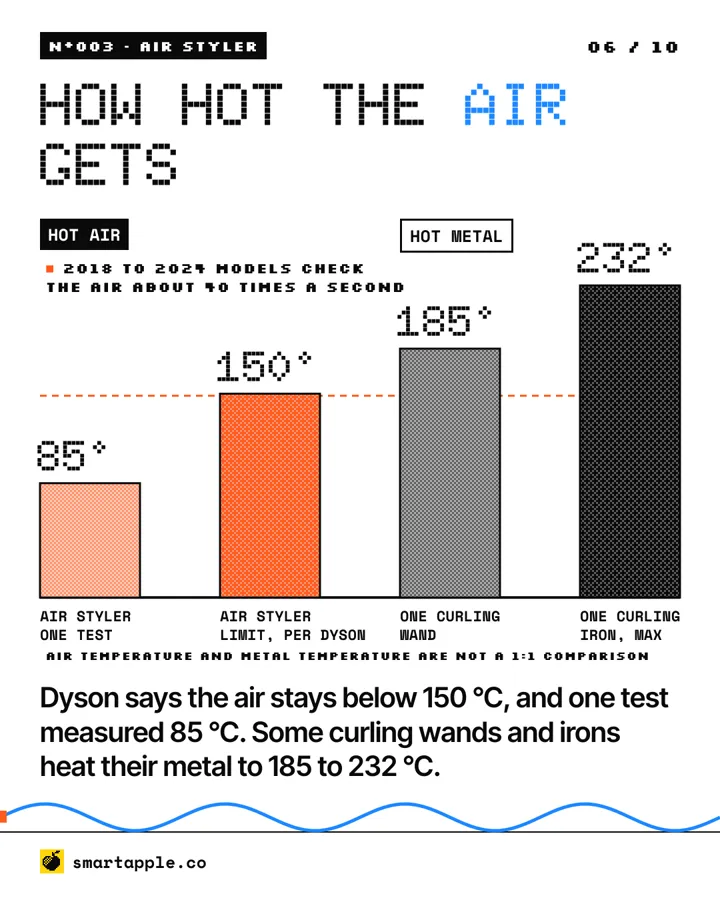
Dysonによると、空気は150 °C未満に保たれ、ある測定では85 °Cでした。カールアイロンやヘアアイロンの中には、金属部分を185~232 °Cまで熱するものもあります。
濡れた髪は形を変えやすい
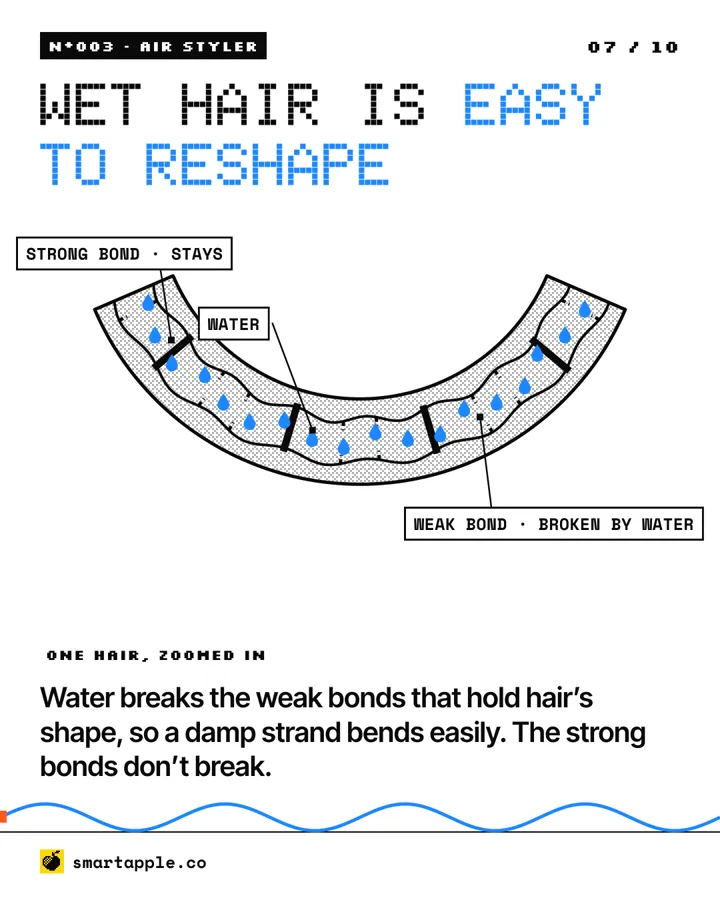
水は髪の形を保っている弱い結合を切るので、湿った髪は簡単に曲がります。強い結合は切れません。
カールは乾くときに定着する
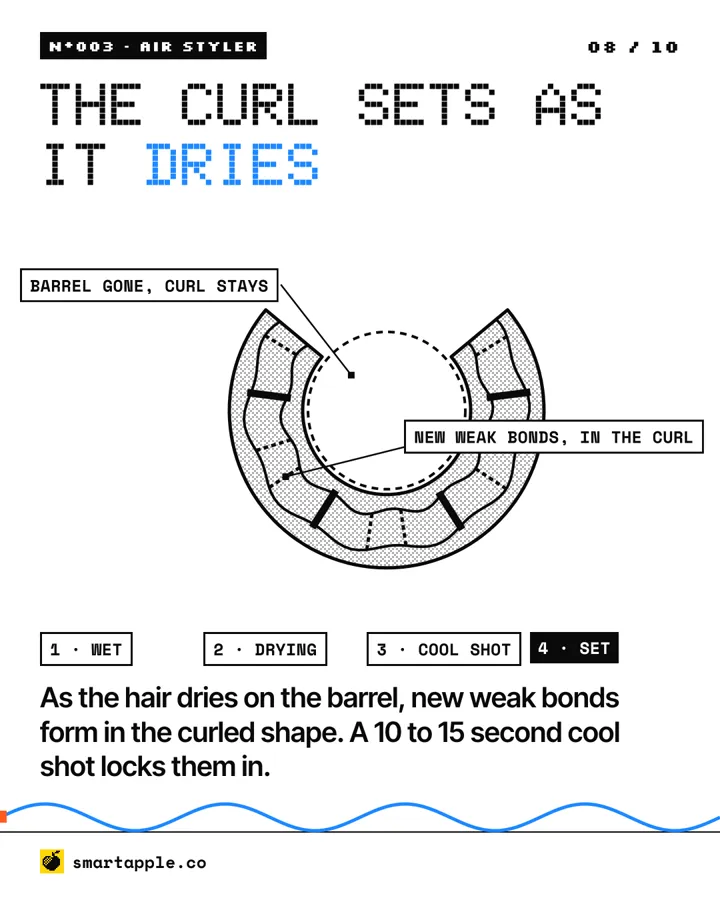
髪がバレルの上で乾くにつれて、カールした形のまま新しい弱い結合ができます。10~15秒間の冷風で、その結合を固定します。
湿気でカールが取れる理由
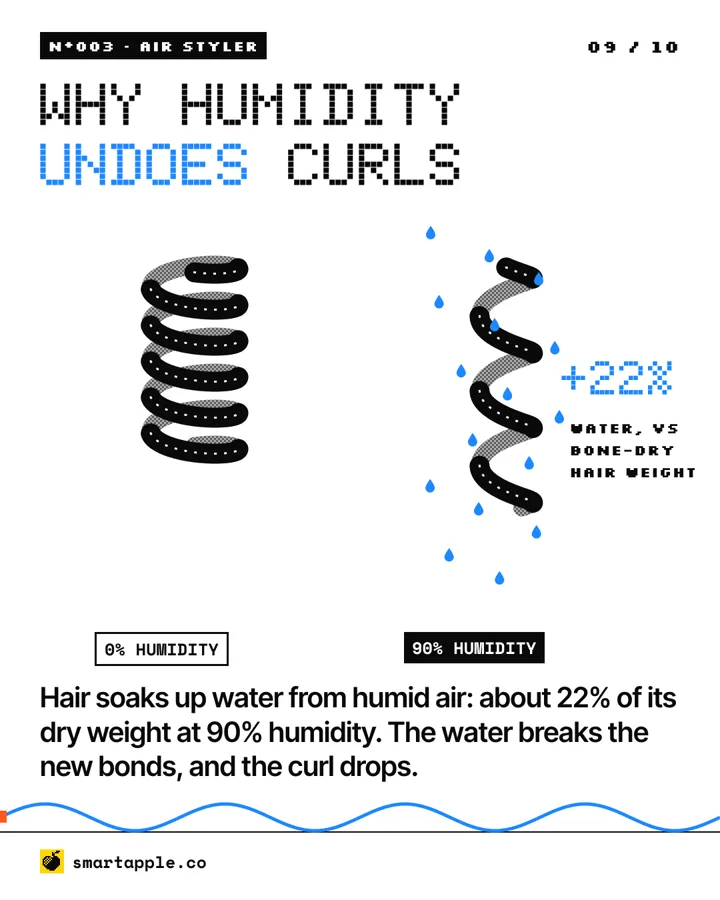
髪は湿った空気から水分を吸い込みます。湿度90%では、その量は乾いた状態の重さの約22%です。この水分が新しい結合を切り、カールが取れます。
こういう仕組みです。
登場するスタイラーは一般的なデザインです。スポンサーはついていません。Dysonとは提携関係にありません。
登場する機器は一般的なイラストであり、実在の製品ではありません。スポンサーはついていません。
Smart Appleは独立して運営されており、Apple Inc.とも、ストーリーに製品が登場するいかなる企業とも提携関係にありません。
AIツールの力を借りて制作し、一次資料と照らし合わせて確認しています。動画にはコンテンツ認証情報(Content Credentials、C2PA)が付いています。
出典
スライド 1 / 10
- No clamp: air wraps the hair around the barrel automatically, clockwise or anticlockwisepatents.google.com
スライド 2 / 10
- Motor (V9) up to 110,000 rpm, 13-blade impeller (Airwrap models 2018 to 2024)dyson.com
- Motor (V9) up to 110,000 rpm, 13-blade impeller (Airwrap models 2018 to 2024)lumafield.com
- About 13 litres of air per second (2018), heater, air out through thin slotstechradar.com
- About 13 litres of air per second (2018), heater, air out through thin slotst3.com
- 110,000 rpm = about 1,833 turns a secondCalculation from the cited figures
スライド 3 / 10
- A fast jet next to a curved surface stays attached and follows it (Coandă effect); Henri Coandă, US patent 2,052,869, granted 1 Sep 1936en.wikipedia.org
- A fast jet next to a curved surface stays attached and follows it (Coandă effect); Henri Coandă, US patent 2,052,869, granted 1 Sep 1936patents.google.com
- Blowing at a bottle puts out a candle behind itthenakedscientists.com
スライド 4 / 10
- The jet drags surrounding air along (entrainment); next to the surface that air can't be replaced, so the pressure there is slightly lower and the jet is pushed onto the curvepatents.google.com
- The jet drags surrounding air along (entrainment); next to the surface that air can't be replaced, so the pressure there is slightly lower and the jet is pushed onto the curveen.wikipedia.org
スライド 5 / 10
- Air pulls the hair onto the barrel and carries it around; the barrel doesn't turn; reversing the airflow reverses the curlpatents.google.com
- Air pulls the hair onto the barrel and carries it around; the barrel doesn't turn; reversing the airflow reverses the curldyson.com
- Outlet air speed 30 to 35 m/s in Dyson patents (examples, not product specs)patents.google.com
- Outlet air speed 30 to 35 m/s in Dyson patents (examples, not product specs)patents.google.com
スライド 6 / 10
- Air kept below 150 °C (a ceiling, not the hottest setting), temperature checked about 40 times a second in 2018 to 2024 models (Dyson claims; the 2025 Co-anda2x lists up to 150,000 rpm and faster checks)dyson.com.au
- Air kept below 150 °C (a ceiling, not the hottest setting), temperature checked about 40 times a second in 2018 to 2024 models (Dyson claims; the 2025 Co-anda2x lists up to 150,000 rpm and faster checks)dyson.in
- 85 °C measured on the hottest setting (one magazine test, method not stated)netzwelt.de
- One curling wand at 185 °C; one curling iron up to 450 °F (232 °C)ghdhair.com
- One curling wand at 185 °C; one curling iron up to 450 °F (232 °C)marlobeauty.com
スライド 7 / 10
- Water breaks hair's hydrogen bonds; disulfide bonds stay; wet hair softens below 0 °Csmithsonianmag.com
- Water breaks hair's hydrogen bonds; disulfide bonds stay; wet hair softens below 0 °Cresearch.manchester.ac.uk
スライド 8 / 10
- New hydrogen bonds form as the hair dries in shape; cooling below the softening point sets it; cool shot of 10 to 15 seconds (Dyson)library.scconline.org
- New hydrogen bonds form as the hair dries in shape; cooling below the softening point sets it; cool shot of 10 to 15 seconds (Dyson)dyson.in
スライド 9 / 10
- Raising humidity from 0% to 90% increases hair weight by about 22% (water, relative to bone-dry hair); at everyday humidity hair already holds part of thatcosmeticsandtoiletries.com