
妊娠検査薬の仕組み
多くの妊娠検査薬に出るピンク色の線は、金の粒子でできています。その仕組みを解説します。
家庭用の妊娠検査薬が探すのは、胚が子宮の壁に着床するとつくられるホルモン、hCGです。尿は毛細管現象によって試験紙を伝って移動し、幅約40ナノメートルの金の粒をつけた抗体を運びます。hCGがこの抗体をテストラインにつなぎとめる場所に金が積み重なり、ピンク色の線になります。
妊娠検査薬の仕組み
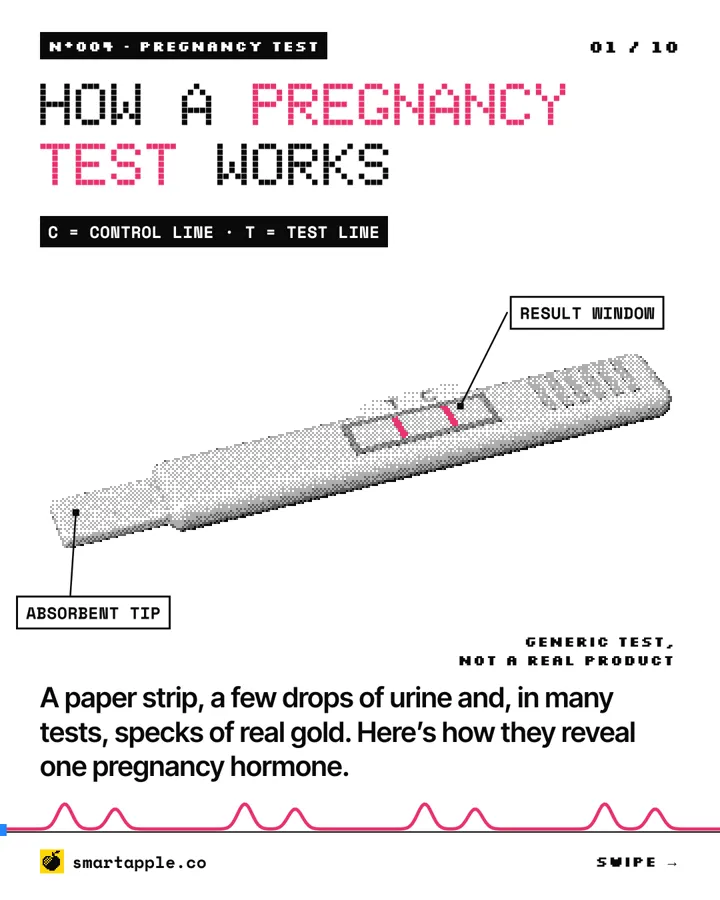
試験紙、数滴の尿、そして多くの検査薬では本物の金の粒。これらがどのようにして、妊娠に関わるホルモンの1つを見つけ出すのかを解説します。
検査薬が探すホルモン
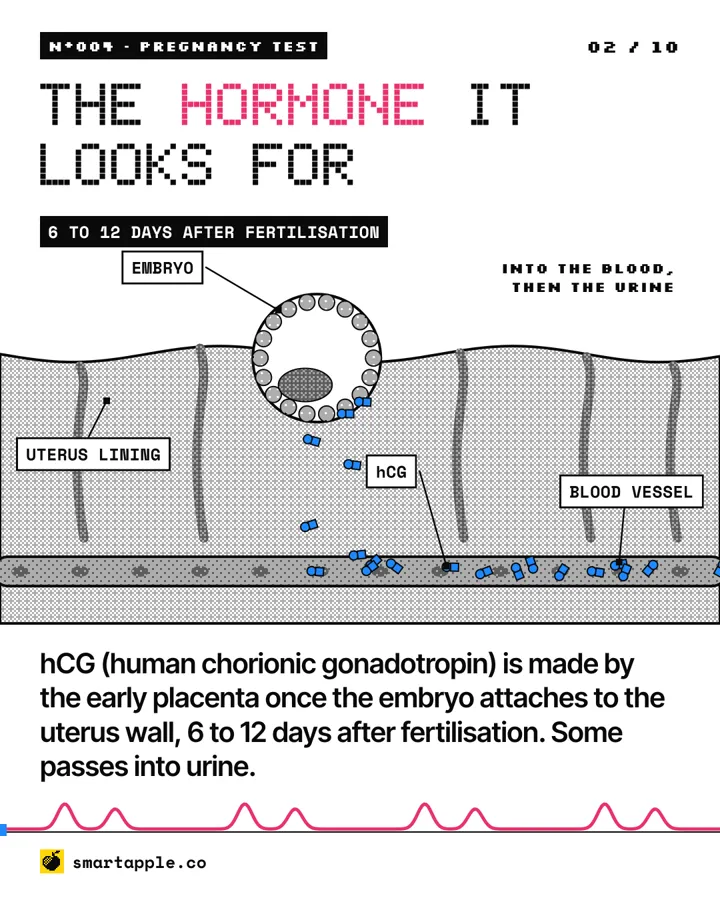
hCG(ヒト絨毛性ゴナドトロピン)は、受精から6~12日後に胚が子宮の壁に着床すると、初期の胎盤でつくられます。その一部が尿に出てきます。
スティックの中身
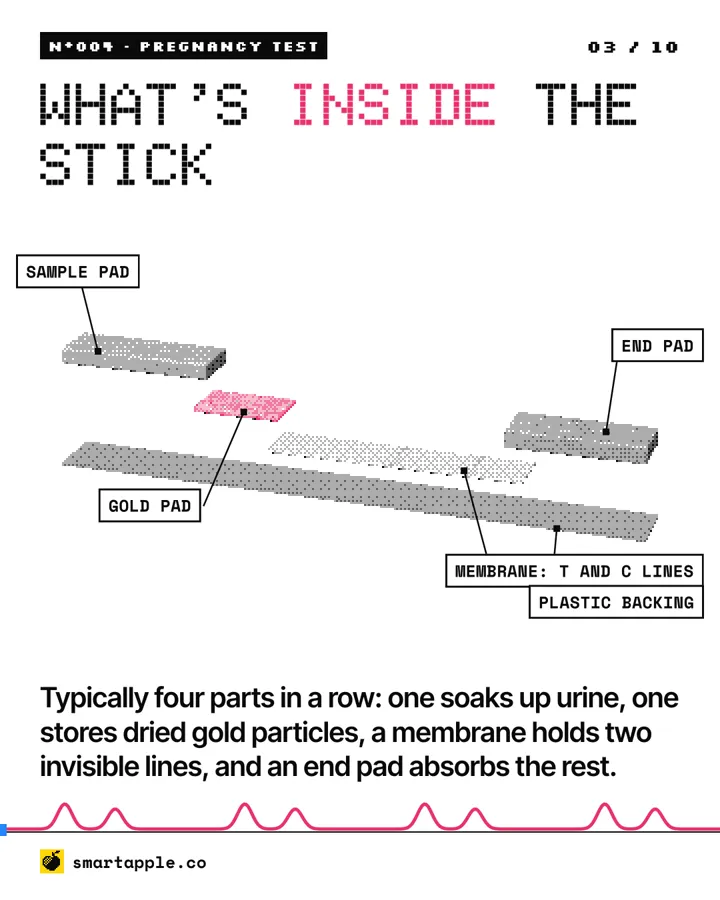
一般的には、4つの部分が一列に並んでいます。尿を吸い取る部分、乾燥させた金の粒子をためておく部分、目に見えない2本のラインがあるメンブレン(膜)、そして残りを吸収する末端のパッドです。
尿がひとりでに動く仕組み
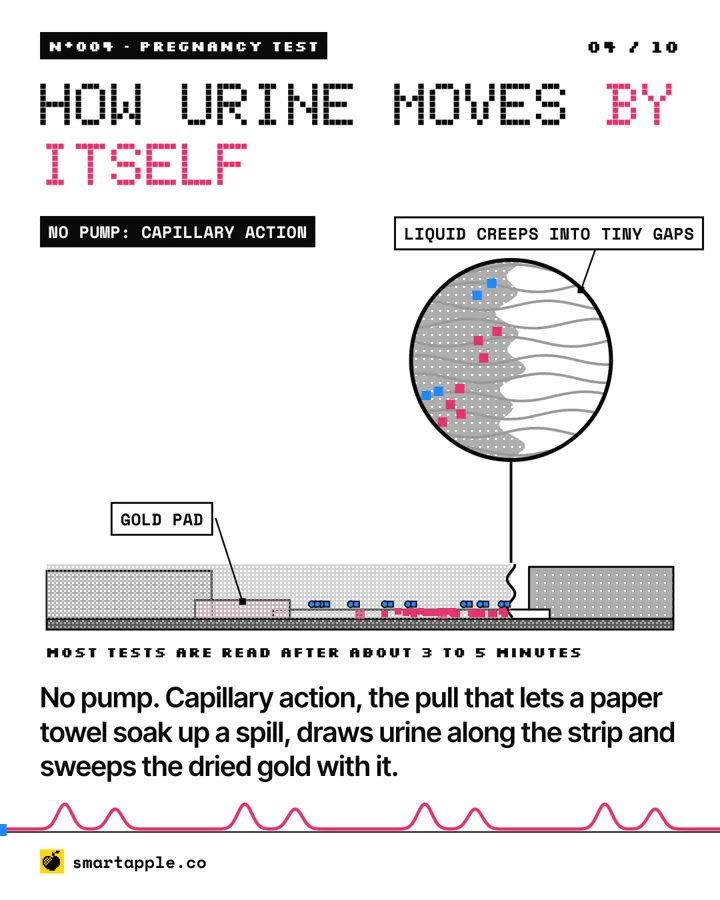
ポンプはありません。毛細管現象(ペーパータオルがこぼれた水を吸い取るときに働く、引き込む力)が、尿を試験紙に沿って引き寄せ、乾いた金の粒子も一緒に押し流します。
ピンク色はどこから来るのか
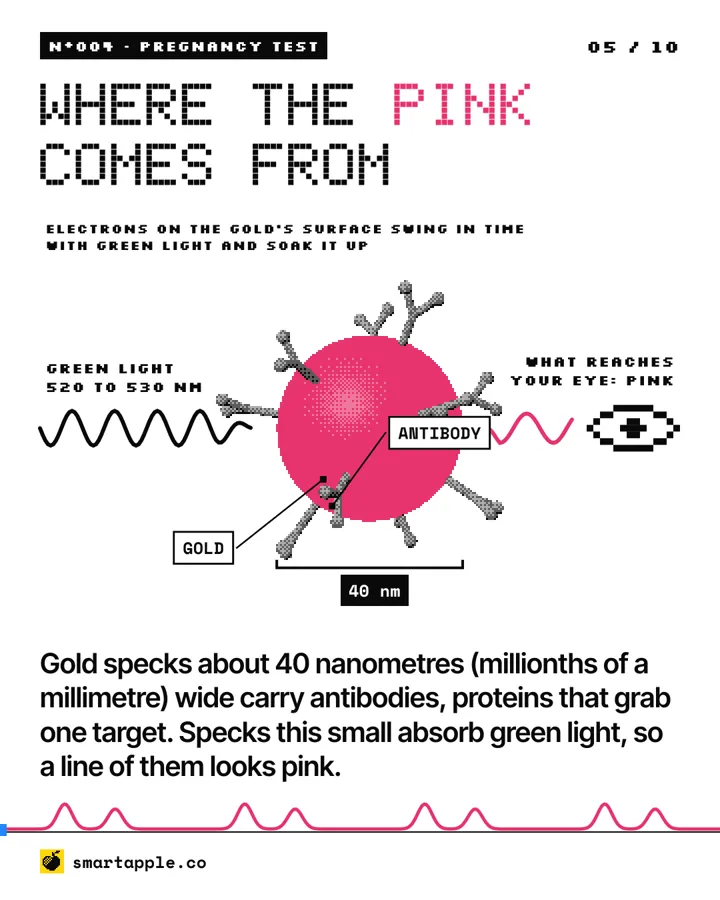
幅約40ナノメートル(1ナノメートルは100万分の1ミリメートル)の金の粒が、抗体(特定の1つの標的をつかむタンパク質)を運びます。これほど小さな金の粒は緑色の光を吸収するため、線状に集まるとピンク色に見えます。
テストラインができる仕組み
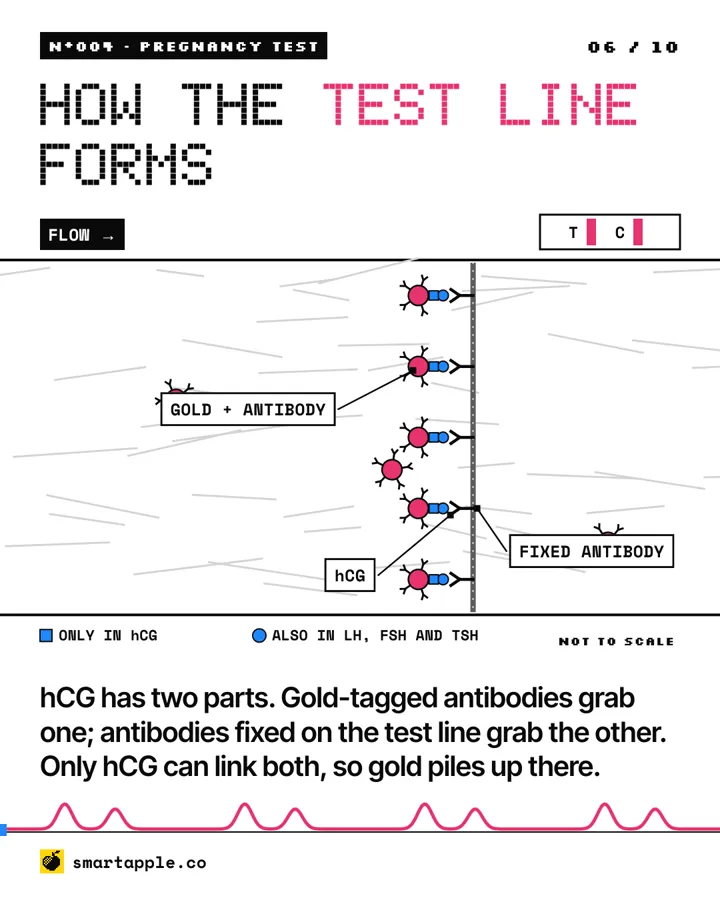
hCGには2つの部分があります。金の粒をつけた抗体が一方をつかみ、テストラインに固定された抗体がもう一方をつかみます。両方をつなげられるのはhCGだけなので、そこに金が集まります。
コントロールラインが示すもの
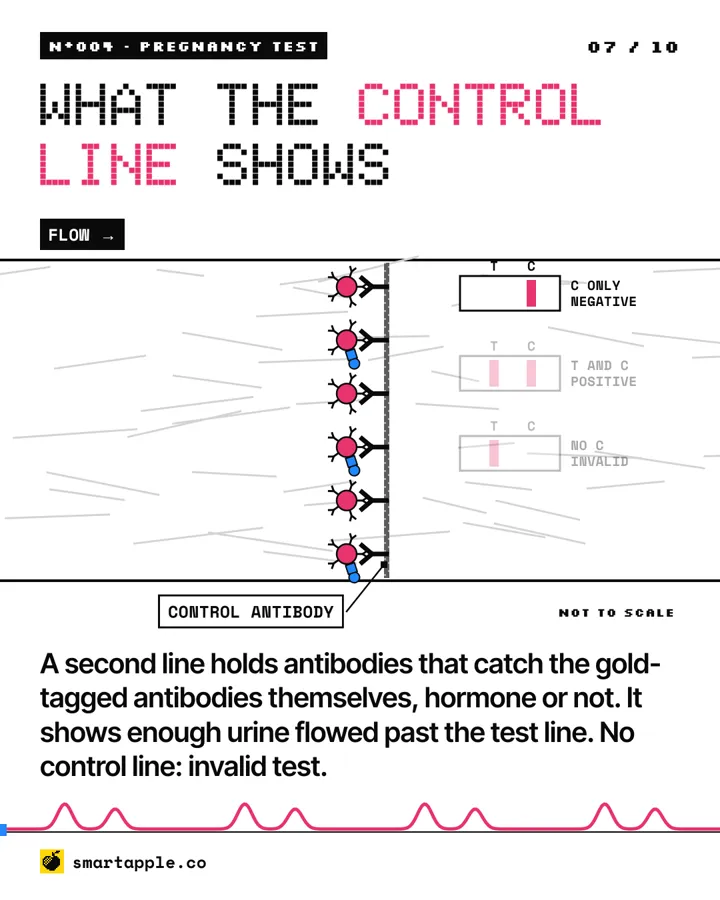
2本目のラインには、ホルモンの有無に関係なく、金の粒をつけた抗体そのものを捕まえる抗体があります。このラインは、十分な量の尿がテストラインを通過したことを示します。コントロールラインが出なければ、検査は無効です。
早すぎる検査が失敗しうる理由
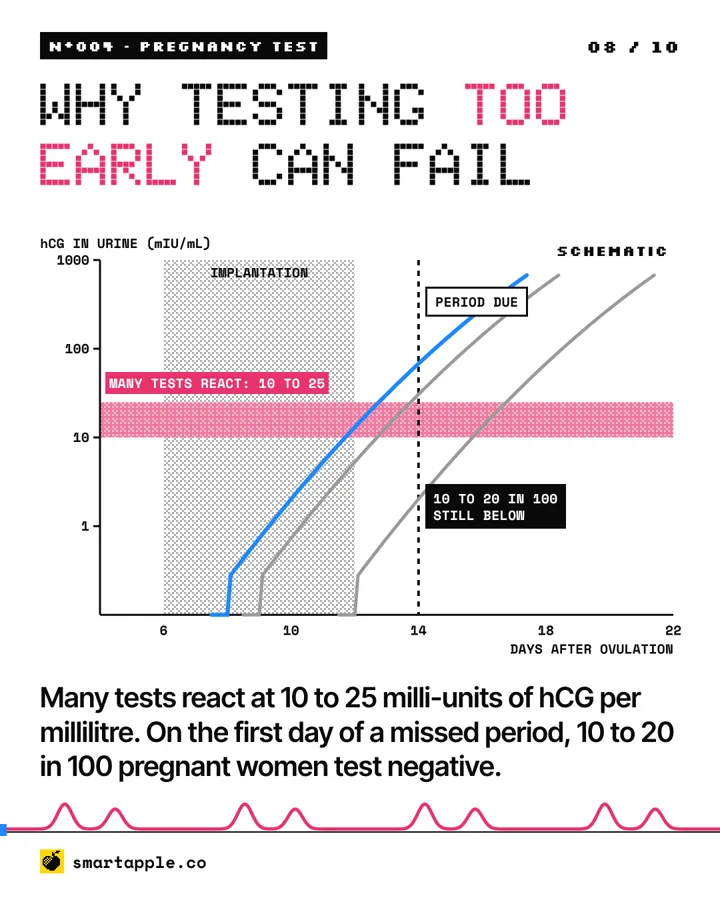
多くの検査薬は、hCGが1ミリリットルあたり10~25ミリ国際単位(mIU/mL)で反応します。生理予定日の当日には、妊娠している女性100人中10~20人が陰性になります。
試験紙以前:マウス、ウサギ、カエル
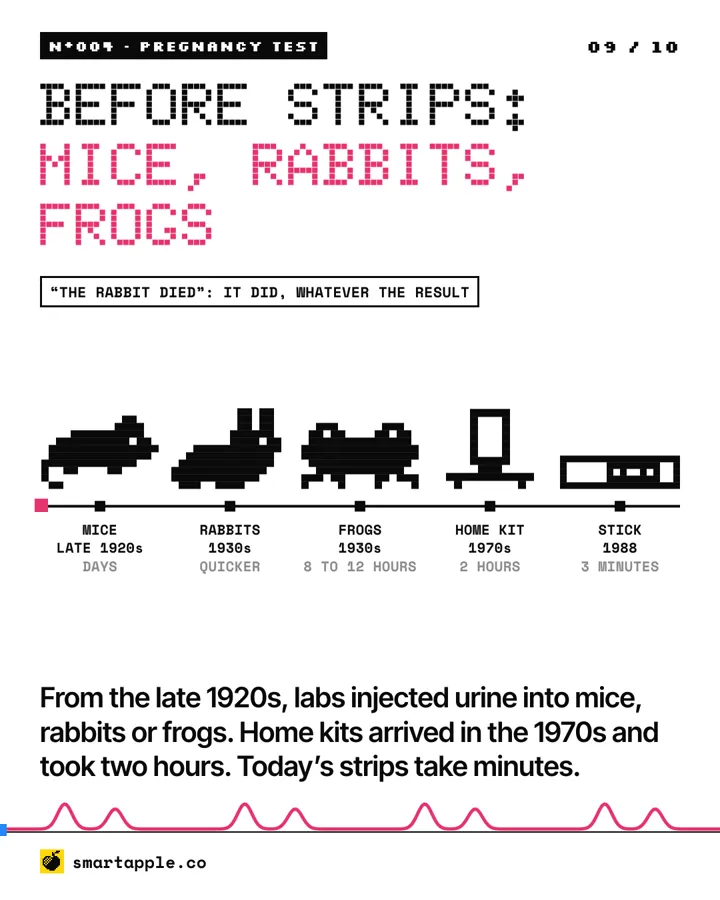
1920年代後半から、検査機関では尿をマウスやウサギ、カエルに注射していました。家庭用キットは1970年代に登場し、結果が出るまで2時間かかりました。今の試験紙なら数分です。
こういう仕組みです。

健康に関する話題は、一般的な情報提供のみを目的として解説しています。医療アドバイスではありません。ご自身の状況については、医師または薬剤師に相談してください。
医療アドバイスではありません。登場する検査薬は一般的なデザインです。
登場する機器は一般的なイラストであり、実在の製品ではありません。スポンサーはついていません。
Smart Appleは独立して運営されており、Apple Inc.とも、ストーリーに製品が登場するいかなる企業とも提携関係にありません。
AIツールの力を借りて制作し、一次資料と照らし合わせて確認しています。動画にはコンテンツ認証情報(Content Credentials、C2PA)が付いています。
出典
スライド 1 / 10
- In many tests the pink line is made of gold particles ("colloidal gold conjugate", "form a pink line")accessdata.fda.gov
スライド 2 / 10
- hCG (human chorionic gonadotropin) is made by the early placenta after the embryo attaches; it first appears 6 to 12 days after ovulation; some passes into urinepubmed.ncbi.nlm.nih.gov
- hCG (human chorionic gonadotropin) is made by the early placenta after the embryo attaches; it first appears 6 to 12 days after ovulation; some passes into urinesciencedaily.com
- hCG (human chorionic gonadotropin) is made by the early placenta after the embryo attaches; it first appears 6 to 12 days after ovulation; some passes into urinefda.gov
- The embryo attaches by the side that carries the inner cell massfrontiersin.org
スライド 3 / 10
- A typical strip has four parts in a row: sample pad, conjugate (gold) pad, nitrocellulose membrane with the T and C lines, end (absorbent) pad, on a plastic backingmdpi.com
- A typical strip has four parts in a row: sample pad, conjugate (gold) pad, nitrocellulose membrane with the T and C lines, end (absorbent) pad, on a plastic backingcdn.shopify.com
スライド 4 / 10
- No pump: capillary flow moves the sample and the dried gold; most tests are read after about 3 to 5 minutes (follow the leaflet)accessdata.fda.gov
- No pump: capillary flow moves the sample and the dried gold; most tests are read after about 3 to 5 minutes (follow the leaflet)fda.gov
スライド 5 / 10
- Gold particles about 40 nm wide carry antibodies; at that size they absorb green light (peak about 520 to 530 nm), so a line of them looks pinksigmaaldrich.com
- Gold particles about 40 nm wide carry antibodies; at that size they absorb green light (peak about 520 to 530 nm), so a line of them looks pinkcdn.shopify.com
スライド 6 / 10
- Gold-tagged antibody grabs the beta part of hCG; the antibody fixed on the test line grabs the alpha part; the alpha part is also in LH, FSH and TSHaccessdata.fda.gov
- Gold-tagged antibody grabs the beta part of hCG; the antibody fixed on the test line grabs the alpha part; the alpha part is also in LH, FSH and TSHncbi.nlm.nih.gov
スライド 7 / 10
- The control line catches the gold-tagged antibodies themselves; it shows enough sample flowed past the test zone ("adequate sample volume and proper wicking"); no control line means an invalid testaccessdata.fda.gov
- The control line catches the gold-tagged antibodies themselves; it shows enough sample flowed past the test zone ("adequate sample volume and proper wicking"); no control line means an invalid testaccessdata.fda.gov
スライド 8 / 10
- Many tests react at 10 to 25 mIU/mL; on the first day of a missed period, 10 to 20 in 100 pregnant women test negativeaccessdata.fda.gov
- Many tests react at 10 to 25 mIU/mL; on the first day of a missed period, 10 to 20 in 100 pregnant women test negativeaccessdata.fda.gov
- Many tests react at 10 to 25 mIU/mL; on the first day of a missed period, 10 to 20 in 100 pregnant women test negativefda.gov
- Many tests react at 10 to 25 mIU/mL; on the first day of a missed period, 10 to 20 in 100 pregnant women test negativescholars.duke.edu
- The hCG curves are schematic (implantation timing varies); the axis counts days after ovulationpubmed.ncbi.nlm.nih.gov
スライド 9 / 10
- Mouse test from the late 1920s, then rabbits and frogs (frogs laid eggs 8 to 12 hours later); "the rabbit died" whatever the result; home kits in the 1970s took about two hours; the 1988 one-step stick took three minuteshistory.nih.gov
- Mouse test from the late 1920s, then rabbits and frogs (frogs laid eggs 8 to 12 hours later); "the rabbit died" whatever the result; home kits in the 1970s took about two hours; the 1988 one-step stick took three minutesijdb.ehu.eus
- Mouse test from the late 1920s, then rabbits and frogs (frogs laid eggs 8 to 12 hours later); "the rabbit died" whatever the result; home kits in the 1970s took about two hours; the 1988 one-step stick took three minutesogmagazine.org.au
- Mouse test from the late 1920s, then rabbits and frogs (frogs laid eggs 8 to 12 hours later); "the rabbit died" whatever the result; home kits in the 1970s took about two hours; the 1988 one-step stick took three minutessmithsonianmag.com
- Mouse test from the late 1920s, then rabbits and frogs (frogs laid eggs 8 to 12 hours later); "the rabbit died" whatever the result; home kits in the 1970s took about two hours; the 1988 one-step stick took three minutescollection.sciencemuseumgroup.org.uk